Behavior-Change Communication for Opioid Use Disorder
The opioid use disorder (OUD) crisis continues to demand coordinated, innovative, and sustained public health responses. Preventing overdoses through awareness of and access to Naloxone, reducing the barriers to medication, and sharing stories of recovery are all critical components to strengthening and healing communities. But this work requires more than programs alone—it takes powerful, human-centered communications strategies that resonate with diverse audiences. And that’s where MORE comes in. We’ve partnered with public health departments, non-profits, and other agencies to develop campaigns that result in measurable engagement. We know how to leverage storytelling, make information about OUD accessible, and use paid media to reach key audiences.
Our expertise includes…
- Outreach and recruitment using thoughtful and effective processes for people in recovery, working with them to co-develop stories that resonate
- Knowledge of the evolving language and terminology around OUD
- Partnership-building with community organizations and health care providers
- Using data to inform strategies for messaging, paid media targeting, and more
MA Department of Public Health, Bureau of Substance Addiction Services
My Path. My Recovery.
Strategic Planning | Testimonial/Story Recruitment | Campaign Development | Photography and Videography | Media Planning and Buying
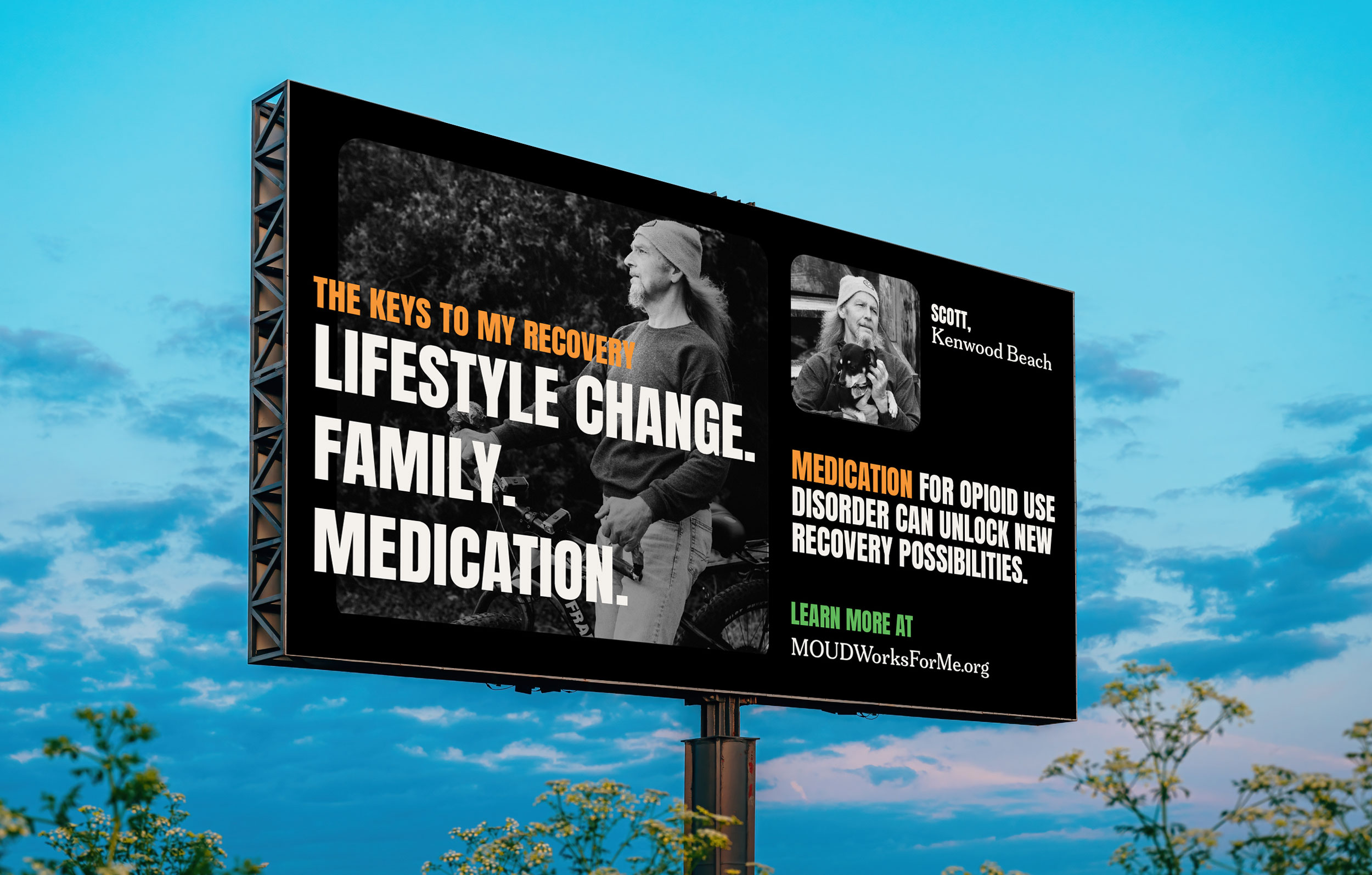
MORE worked with the Massachusetts Department of Public Health’s Bureau of Substance Addiction Services (BSAS) to develop a campaign that help normalize all pathways to recovery, including treatment using MOUD or medication assisted treatment (MAT). We shared stories of real individuals and their paths to recovery. Our media strategy combined outdoor and targeted digital advertising, as well as video and collateral. After just 8 weeks, the campaign generated 22,670 clicks and 1,168,367 completed video views.
MA Department of Public Health, Bureau of Substance Addiction Services
#StateWithoutStigMA
Strategic Planning | Community Engagement | Campaign Development | Photography and Videography | Media Planning and Buying
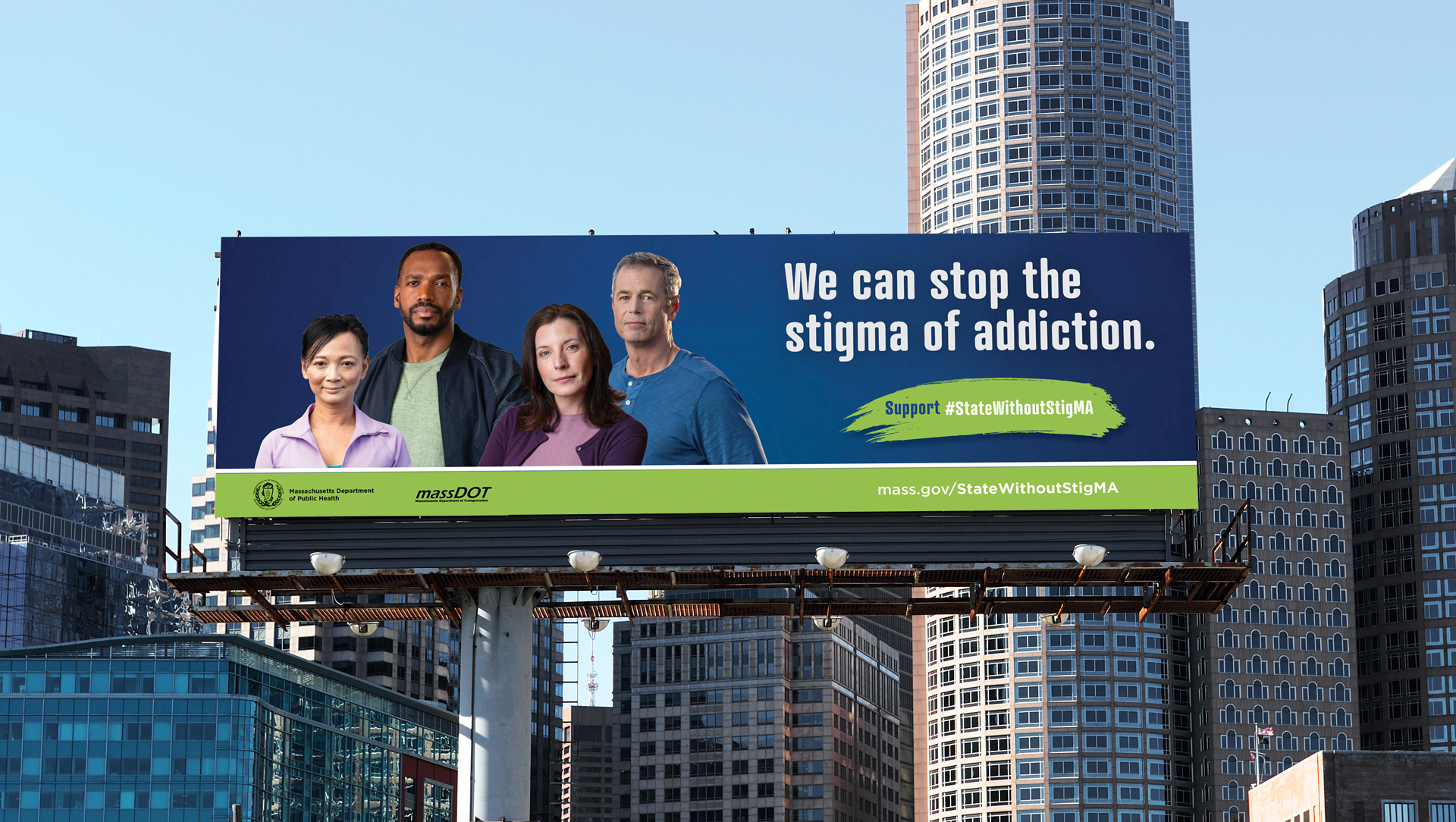
Stigma is one of the biggest barriers to change, and it directly shaped MORE’s messaging and creative direction. We leaned into storytelling, lifted trusted messengers, and confronted misconceptions head-on to shift thinking, soften resistance, and open the door to recovery. In 2019, MORE launched #StateWithoutStigMA, reframing the conversation around one grounding truth: Addiction isn’t a moral failure. It’s a disease. When the dialogue stayed steeped in stigma, we evolved the campaign in 2020 to focus on how communities and individuals can take a stand against it.

MA Department of Public Health, Bureau of Substance Addiction Services
Save a Life: Overdose Prevention
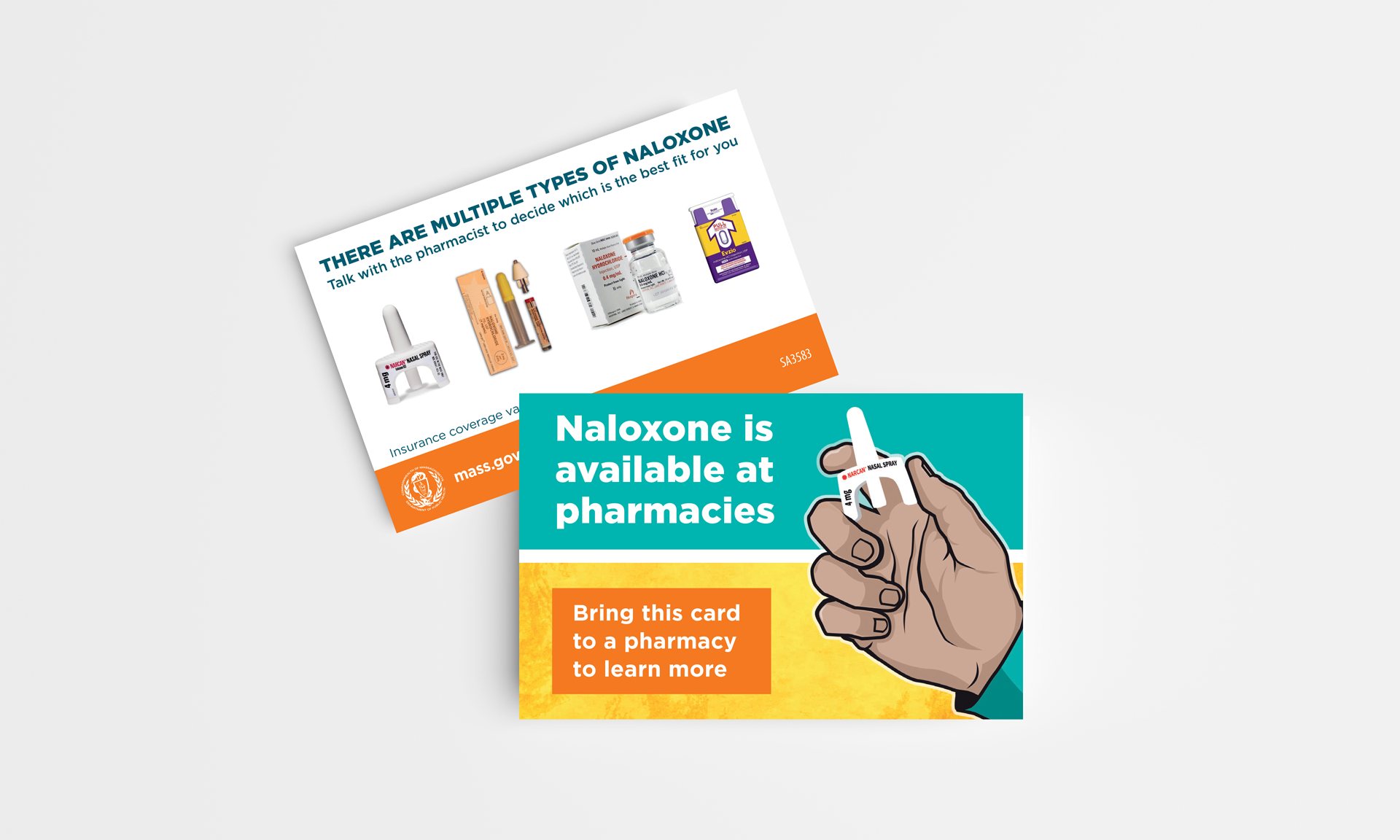
MORE partnered with BSAS again on opioid prevention by launching Make the Right Call, a campaign built around raising awareness of the 911 Good Samaritan Law and later expanding into pharmacy access to Naloxone. We designed and tested discreet, judgment-free tools—including a confidential pharmacy request card—so people could ask for Naloxone without fear of bias or shame. The work focused on harm reduction, always grounded in direct feedback from people who use drugs and people in recovery.
Calvert County MD Health Department, Local Behavioral Health Authority
Medication for Opioid Use Disorder (MOUD) Program Awareness
MORE partnered with the Calvert County LBHA to develop a campaign about medication for opioid use disorder (MOUD) and the free support available for residents from the LBHA program. MORE collected personal stories of individuals in recovery, providing the LBHA team with a sustainable process and related tools for community-based recruitment in the future. To normalize the use of and elevate the effectiveness of MOUD, the campaign features three individuals and their keys to recovery, with MOUD as one of their keys. The campaign is running on social and digital media, including digital OOH boards. MORE revamped the program’s website, MOUDWorksForMe.org, to address myths and misconceptions head-on, while prominently featuring the free case management services from the county.